The Journey of E-Waste: From Donation to New Life
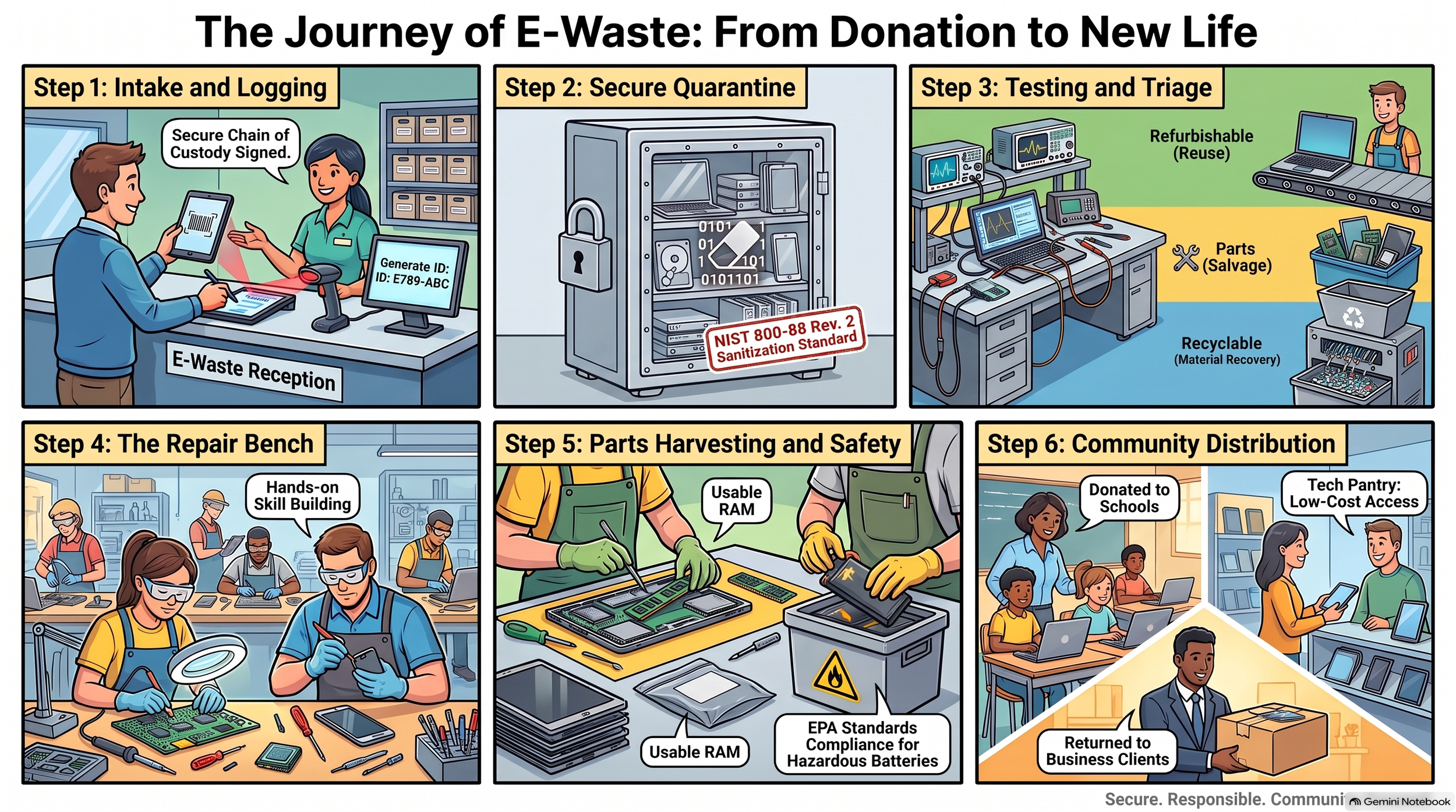
All donated electronics follow a structured workflow that ensures data security, maximizes reuse potential, and provides hands-on training opportunities.
Intake: Upon arrival, items are logged, labeled with a unique ID, and given an initial assessment. Donors are informed of available data services and sign an acknowledgment of transfer, initiating a secure chain of custody for data wiping or tax purposes.
Secure Quarantine: All devices with potential Personally Identifiable Information (PII) data are immediately placed in a locked cabinet. They are tracked and held in this secure area per NIST 800-88 Rev. 2 standards until their data has been professionally sanitized.
Testing & Triage: Once cleared from quarantine, devices are thoroughly tested and sorted into one of three distinct pathways:
Refurbishable - can be restored for reuse,
Parts - useful components can be salvaged, or
Recyclable - non-repairable items destined for material recovery.
Repair: Items designated as refurbishable are moved to the repair bench. Here, technicians and trainees perform necessary repairs, upgrades, and cleaning to restore the devices to full functionality, providing a crucial hands-on training experience.
Parts & Safety: For non-working devices, usable components like RAM, hard drives, and screens are salvaged and inventoried for future repairs, while hazardous materials, particularly batteries, are safely removed, sorted, and stored according to EPA standards.
Distribution: Fully refurbished items are prepared for their new life. They are securely stored before being donated to families and schools, resold at low cost through the Tech Pantry, or returned to business clients.